One hundred years ago, on September 1, 1923, Tokyo was hit by a M7.9 earthquake that badly damaged the city. Because the quake struck just as mid-day meals were being prepared across the city, fires broke out across the city causing even further (some say even more serious) damage. Altogether, between 100,000 and 150,000 lives were lost.
On the same day, while Tokyo was facing this calamitous destruction, a new Imperial Hotel designed by Frank Lloyd Wright, was opening in Tokyo’s Hibiya district. Perhaps it is a testament to the genius of Wright’s design that the new hotel sustained only minimal damage. It went on to have an illustrious 45 year career as one of Tokyo’s finest international hotels before being replaced in 1968 by a more modern high rise hotel which will soon itself be replaced.
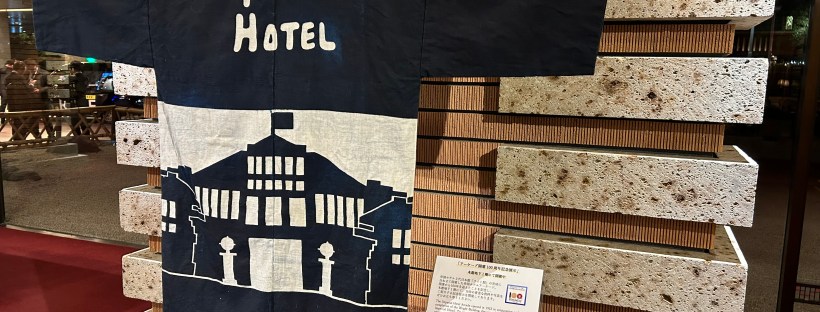
To commemorate the 100th anniversary of Wright’s design, the current imperial hotel has an exhibition in their lobby about the so-called “Wright Imperial”. The exhibition explains various features of hotel style introduced by Wright in his design to highlight not only the structure but the hotel and hospitality practices that shifted because of it.
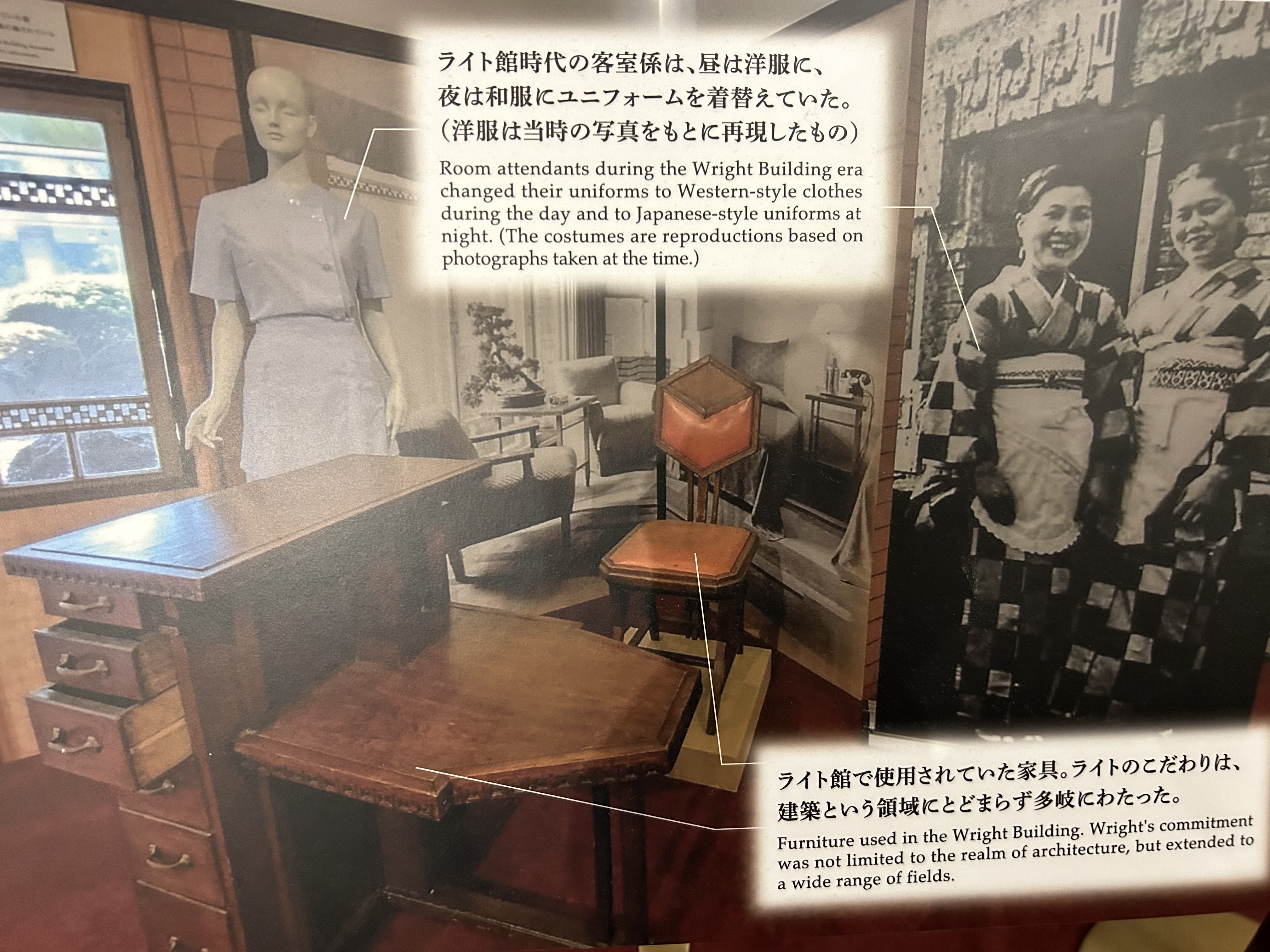
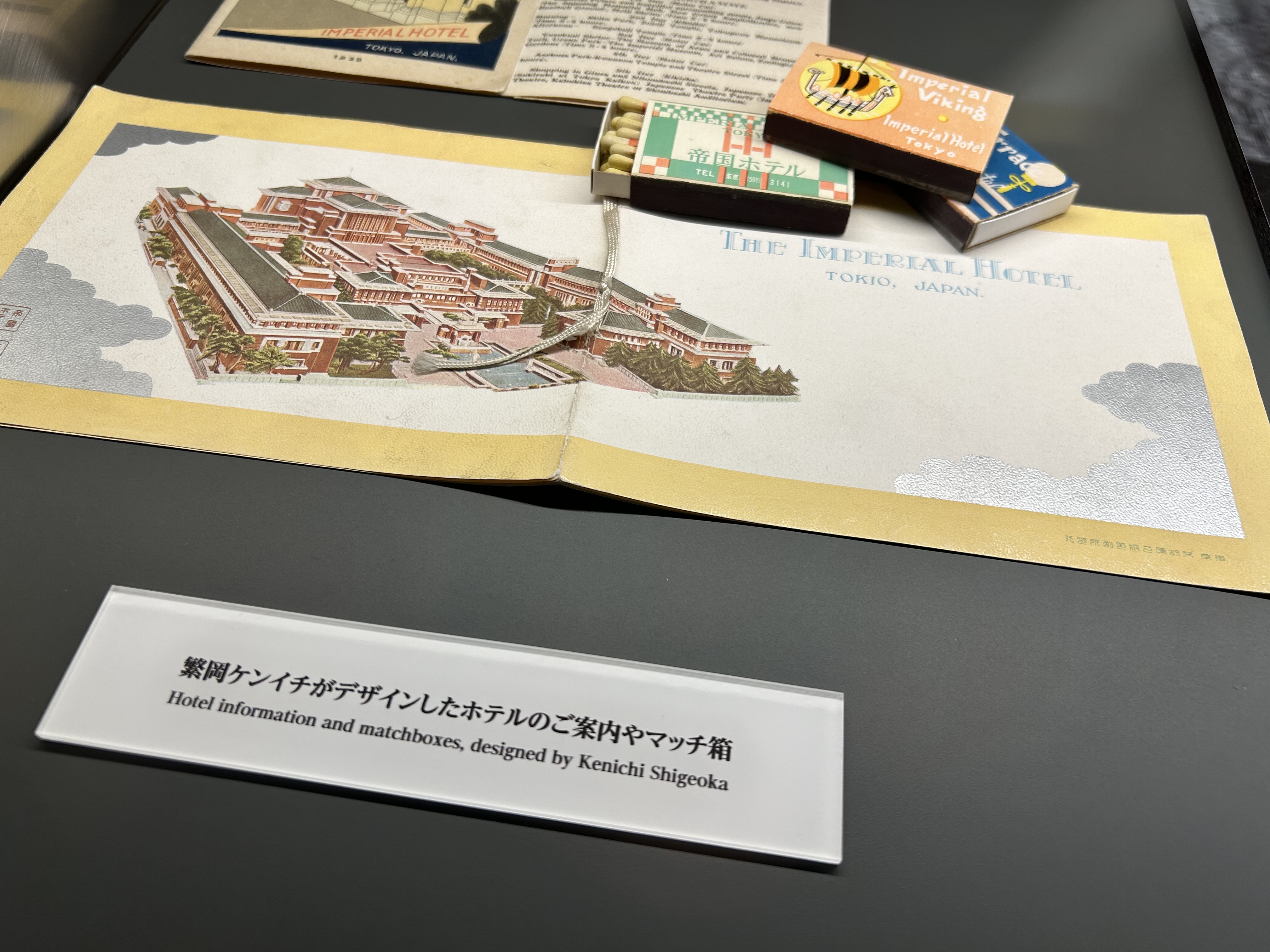
There are even displays about the earliest hotel chefs and how the hotel ensured the comfort of its guests.
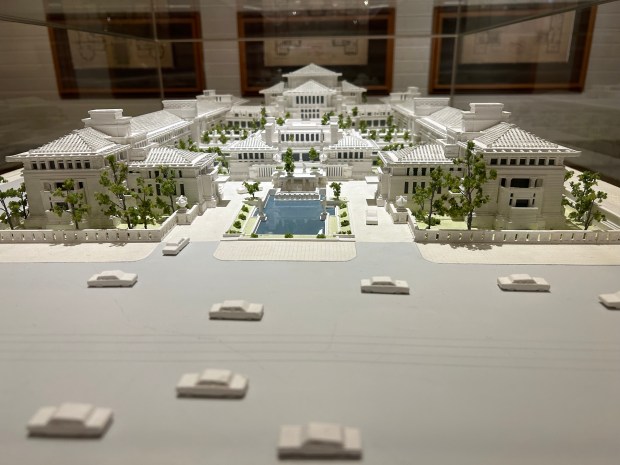
The Wright Imperial was a low-rise (three story) structure with four wings emanating from a central lobby set back from the street and fronted by a reflecting pool. The hotel faces Hibiya Park, one of Tokyo’s earliest western-style public parks, and it is often said that Wright intended his design to blend seamlessly with the park’s greenery.
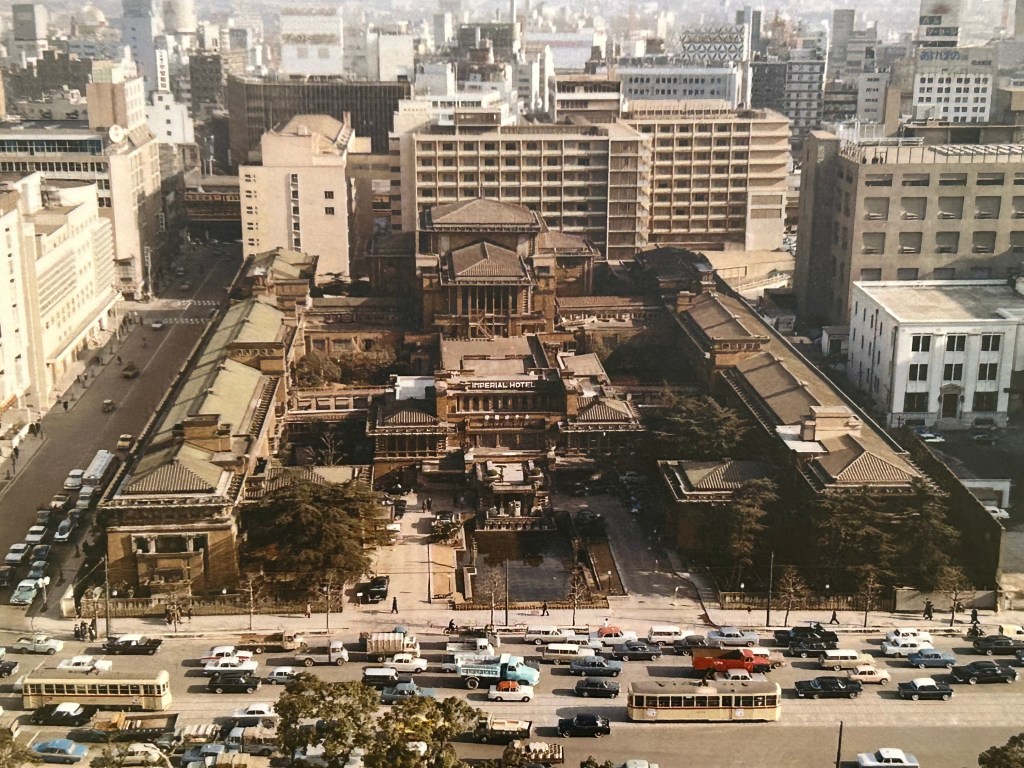
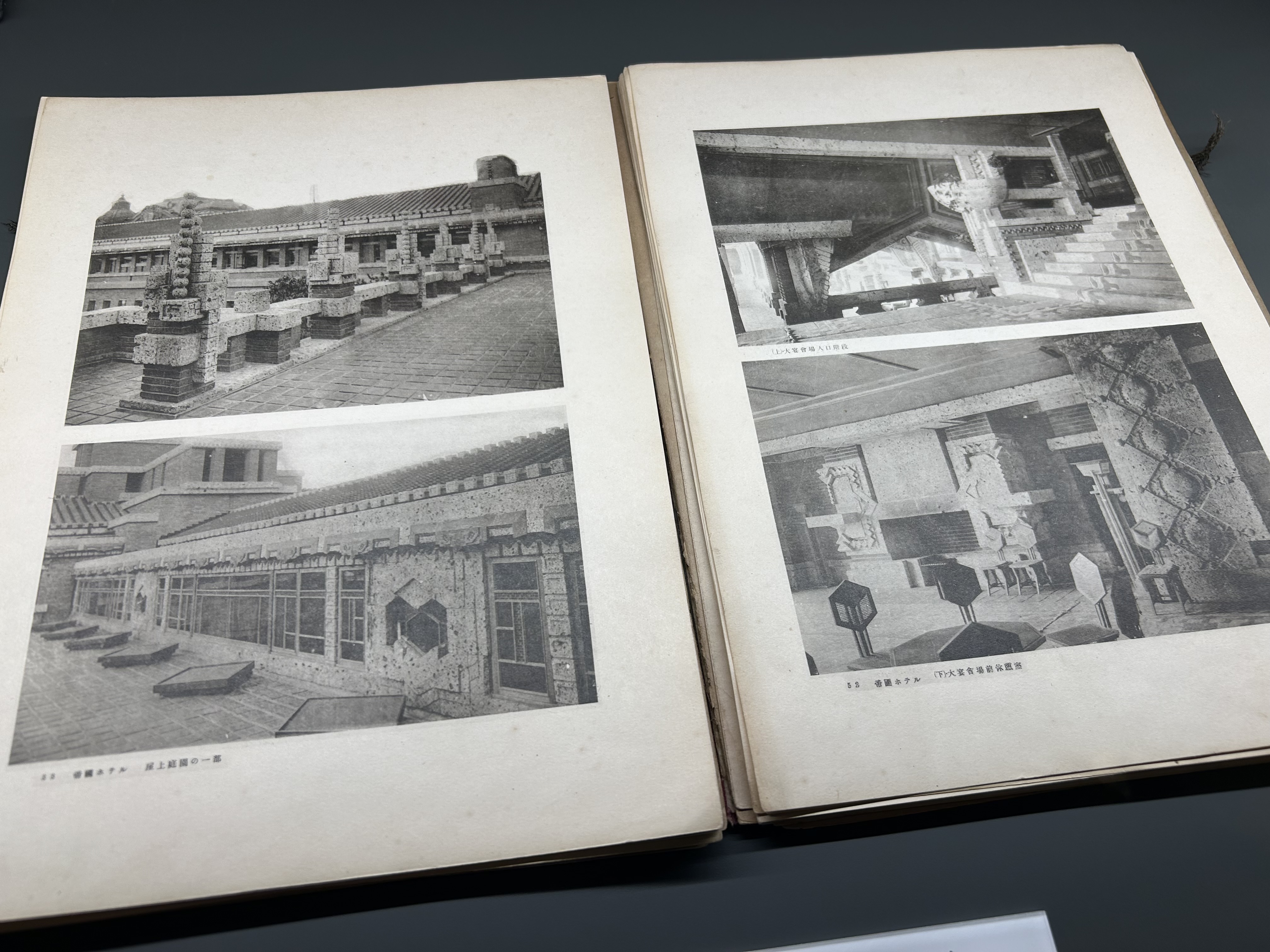
His exterior design was brick with carved stone accents. It was been alternatively referred to as influenced by Aztec architecture and as an Art Deco building.
The interior was replete with Art Deco geometric lines, including in the light fixtures, carpets and furniture Wright also designed for the hotel.
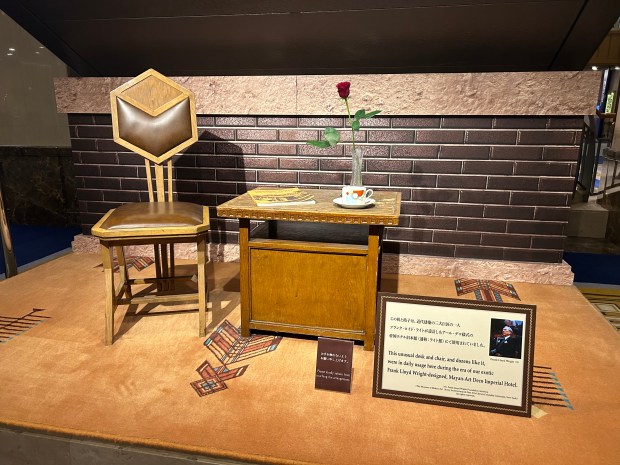
For stone accents, Wright decided to use Oya stone, a form of pumice stone formed by undersea volcanic ash eruptions exposed in Japanese mountains resulting from tectonic uplift. The stone is relatively soft, like sandstone, and therefore easily worked into Wright’s designs. Once cut, oxidation causes the stone to subtly change color over time.


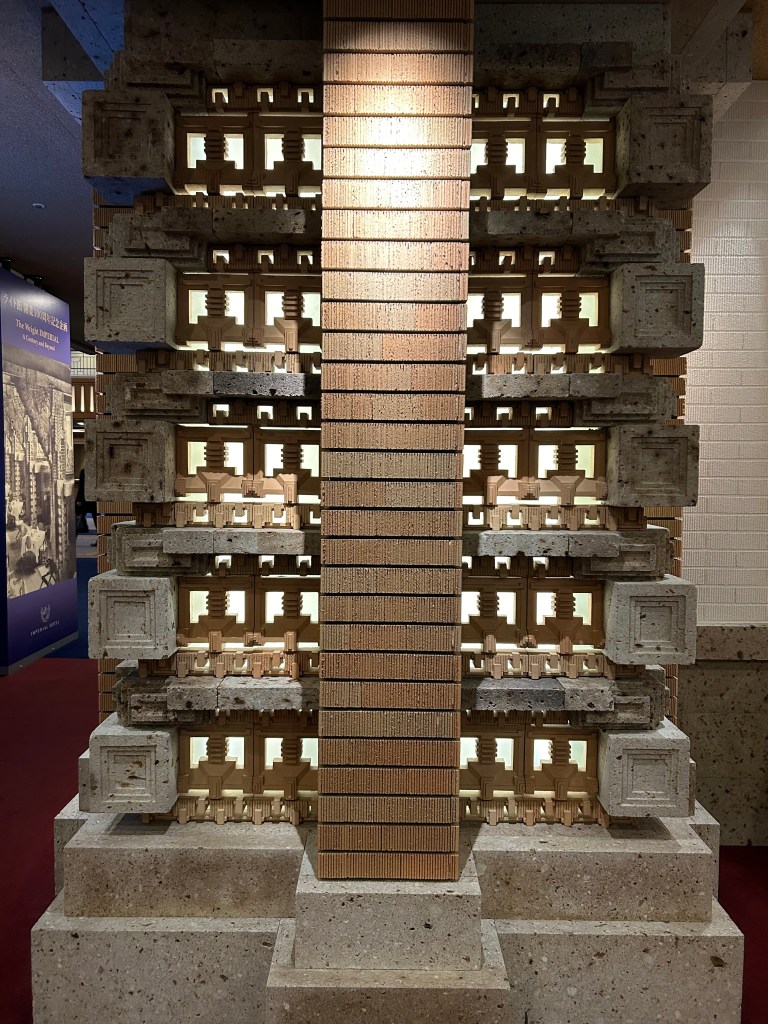
Apparently when Wright realized Oya stone was most suitable for his plans for the Imperial, he traveled to Oya, a small quarrying town in Tochigi Prefecture, to source enough stone for his needs. When the local quarrymen learned of the quantity of stone Wright would require, they advised him to purchase a quarry for himself, which he ultimately did.
In the four plus decades that the Wright Imperial was operating, it saw any number of celebrity guests and served the international community in various ways.
Since the American embassy was destroyed by the Great Kanto Earthquake and ensuing fire (the acting consul general and his wife both perished in the disaster) the embassy temporarily operated out of the newly opened hotel.
The Wright Imperial also contained a hotel shopping arcade, which is credited with being Japan’s first shopping mall. The original shops offered largely souvenir items, a concept designed for the convenience of international travelers. Today’s Imperial Arcade, since located in the basement level of the hotel, has over 50 shops, largely offering luxury items.
Over the years, the Wright Imperial saw such celebrity guests as Babe Ruth, Helen Keller, Charlie Chaplin, Cary Grant, and Frank Sinatra. Joe DiMaggio and Marilyn Monroe honeymooned at the Imperial in 1954.

When it came time to replace the Wright Imperial with a modern high rise hotel in the 1960s, architecture enthusiasts and history buffs campaigned to have part of the famed building preserved. Thus the lobby part of the building was removed to Meiji Mura, an outdoor architectural museum in Aichi Prefecture, not far from Nagoya. The tea shop that was on the mezzanine level of the lobby still operates, enabling visitors to relax and soak up the ambience of the famous hotel. A display near the entrance highlights the celebrity visitors.
Although it is sad that this iconic building could not be saved in its entirety, it is also wonderful that part of it could be preserved and that its memory is celebrated even after a hundred years.
© 2023 Jigsaw-japan.com and Vicki L. Beyer
We’re thrilled if you share this link; if you want to re-use in any other way, please request permission.
 Jigsaw Japan