
An early morning visit to the largest seafood market in the world is still high on the must-do lists of many visitors to Tokyo, even after the market moved to its new location in Toyosu a few years ago. A visit to the Toyosu Seafood Market is more “sanitized” than one to its predecessor, Tsukiji–at Toyosu visitors are only able to observe the activities of the market from catwalks or behind glass. Nonetheless, a post-market sushi breakfast is still de rigueur, if one can figure out where to go.
My good friend, Tadanori Sugimoto, kindly introduced me to a great spot: Daiwa-zushi. It is regarded as one of the top two sushi restaurants in the vicinity of the market. Eating there was a real experience.
The restaurant has only 26 seats, all at counters where diners can watch their sushi being prepared and even chat with the itame (sushi masters). Large glass cases containing the various kinds of fish available on the day separate the diners from the itame. They add to the ambience and tempt or prompt the diners as they order.


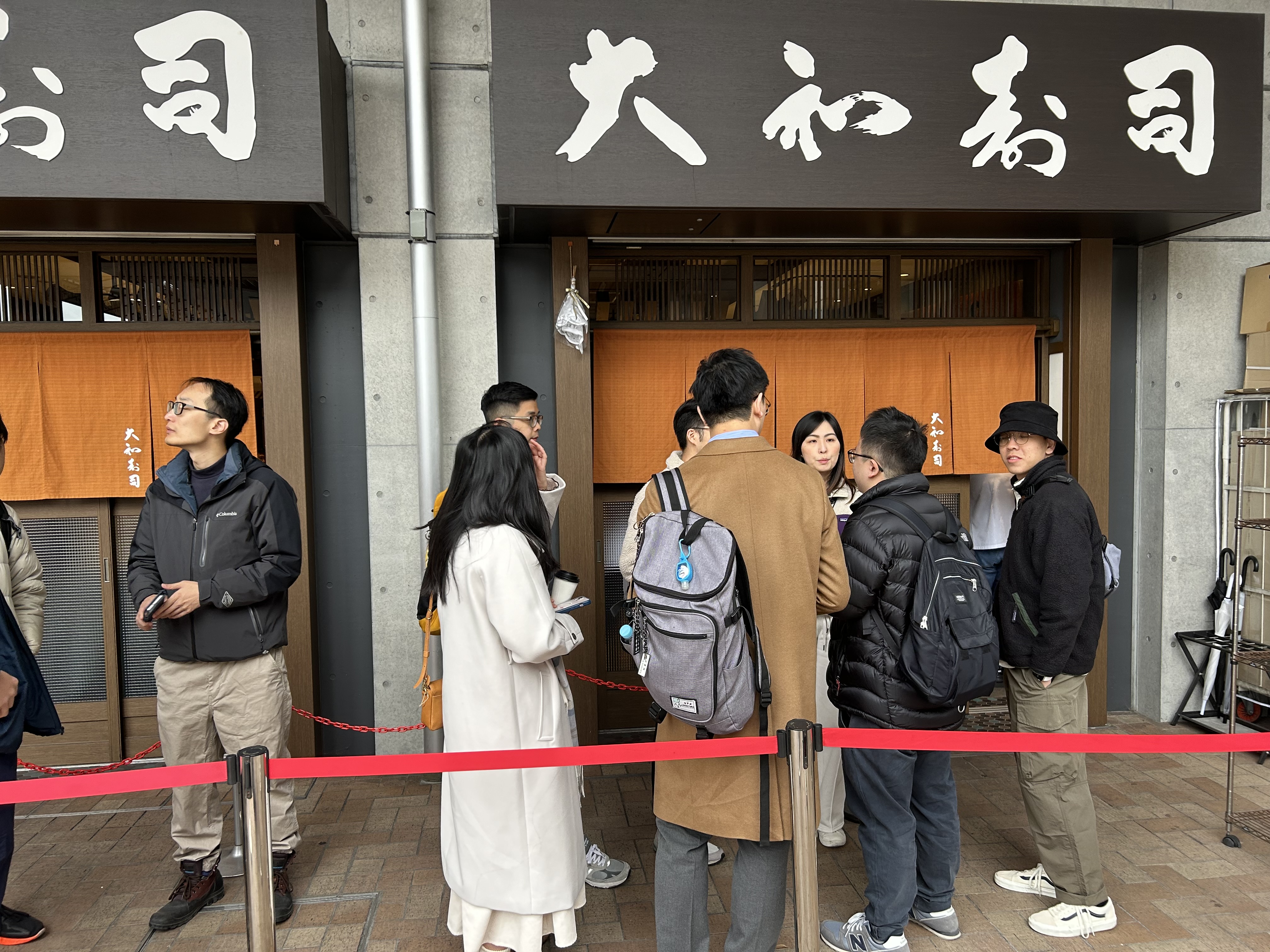
Being so small, and so popular, it is not unusual for as many as three or four dozen people to be patiently waiting in line outside for their turn to sit and enjoy the very fine sushi. (Hint: Tuesdays are one of the slower days, so that’s a great day to go to avoid a long wait.)

A meal at Daiwa-zushi begins with “setting the table.” In front of each guest is laid a cup of steaming hot green tea, a lacquered board known as a geta, and a small dish into which the guest can pour soy sauce for dipping their sushi or sashimi. Depending on the fish in season, there may also be a small dish of salt with a wedge of sudachi (a sour green citrus grown in Japan). Needless to say, chopsticks and an o-shibori (hand washing cloth) soon follow.
The first item placed on the geta, often before anything has even been ordered, is a small mound of pink pickled ginger slices, a popular condiment served with sushi because it both compliments the sushi flavors and cleanses the palate.

Next comes a wad of wasabi (the real stuff, unadulterated with western horseradish), placed in the corner of the geta between the ginger pickles and the customer. There is probably more wasabi than anyone could want, but the restaurant wants to be sure the customer has all needed. Bit by bit it can be added to the soy sauce in the small dish provided.
One popular way to order at Daiwa-zushi is to get the “omakase” (chef’s choice) course: seven different plates of sushi, each distinctive and delicious. Apparently it costs between four and five thousand yen and is highly recommended by many diners. It usually includes the most delectable morsels of the season.
In spite of its popularity, I did not have the omakase course for my breakfast. Tadanori knows Daiwa-zushi and its itame well and therefore ordered for me from the a la carte menu. The result was an excellent meal that was a combination of sushi and sashimi! For those unaware of the difference, sashimi is slices of raw fish while sushi is sashimi or other toppings on an oblong ball of slightly vinegared rice.
The itame of Daiwa-zushi are skilled and quick, turning out delectable morsels in the blink of an eye.

We started our meal with several pieces of sashimi that were particularly in season. I was so overwhelmed with the fresh, delicious flavors that I promptly forgot the names of the fish I was being served. When something tastes so good, who cares what it’s called?
Besides the amazing tastes, the generous portions are particularly noteworthy. I always thought that sashimi was meant to be bite-sized!
Several different types of sushi followed in short order.

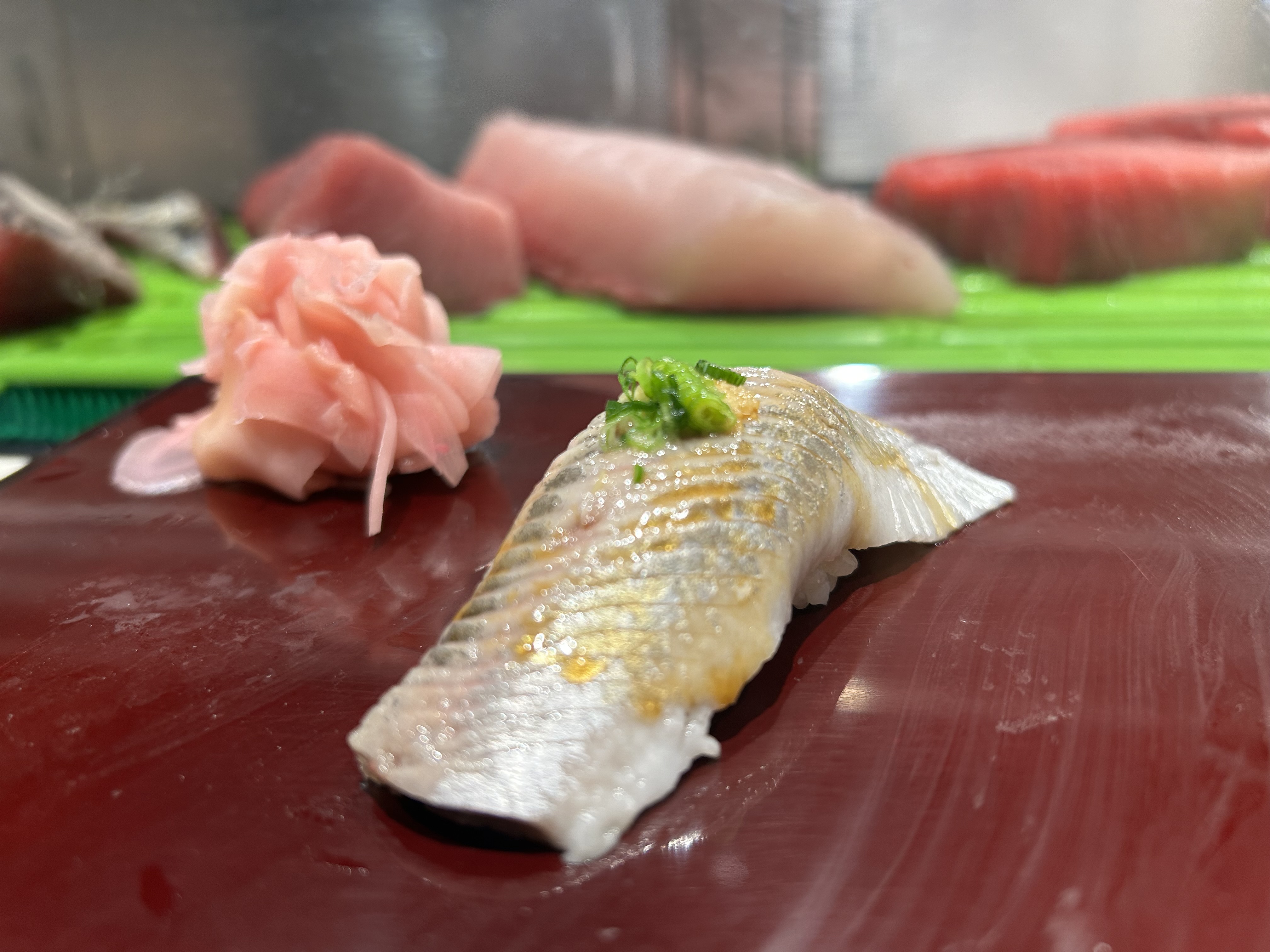

I am very fond of uni (sea urchin), which is especially good in winter season, and had a choice of two styles. Once again, the size of the servings were much larger than they would be anywhere else.


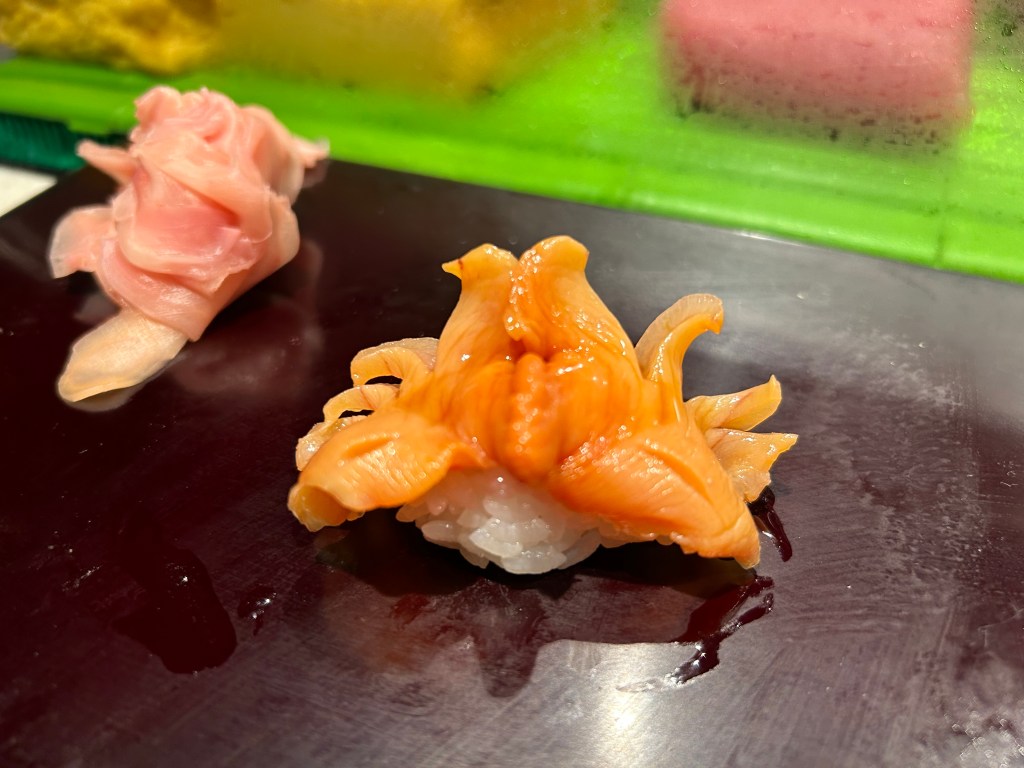
My kind host indulged my every sushi whim, so I also had some delicious aka-gai.
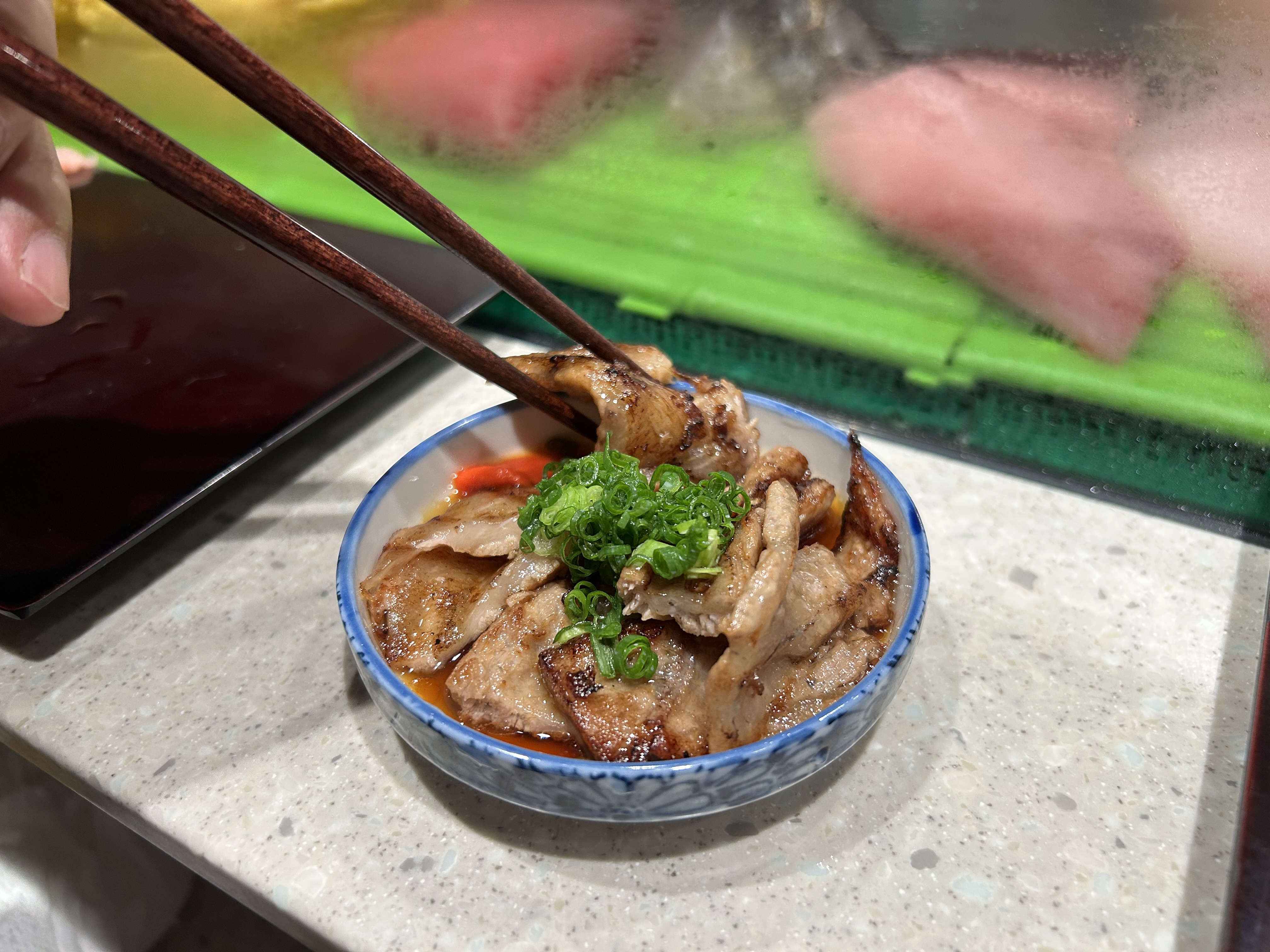
Some prepared dishes like chawan-mushi (a savory egg custard) are also available. I have to confess there were a couple of prepared dishes that were beyond my ability to eat: grilled tuna skin (I found it gristle-y and unpleasantly chewy) and shirako (in English, milt, the seminal fluid of codfish). Tadanori swears they were quite tasty, but I could only bring myself to nibble on the grilled bits. (We don’t have to like everything, do we?)
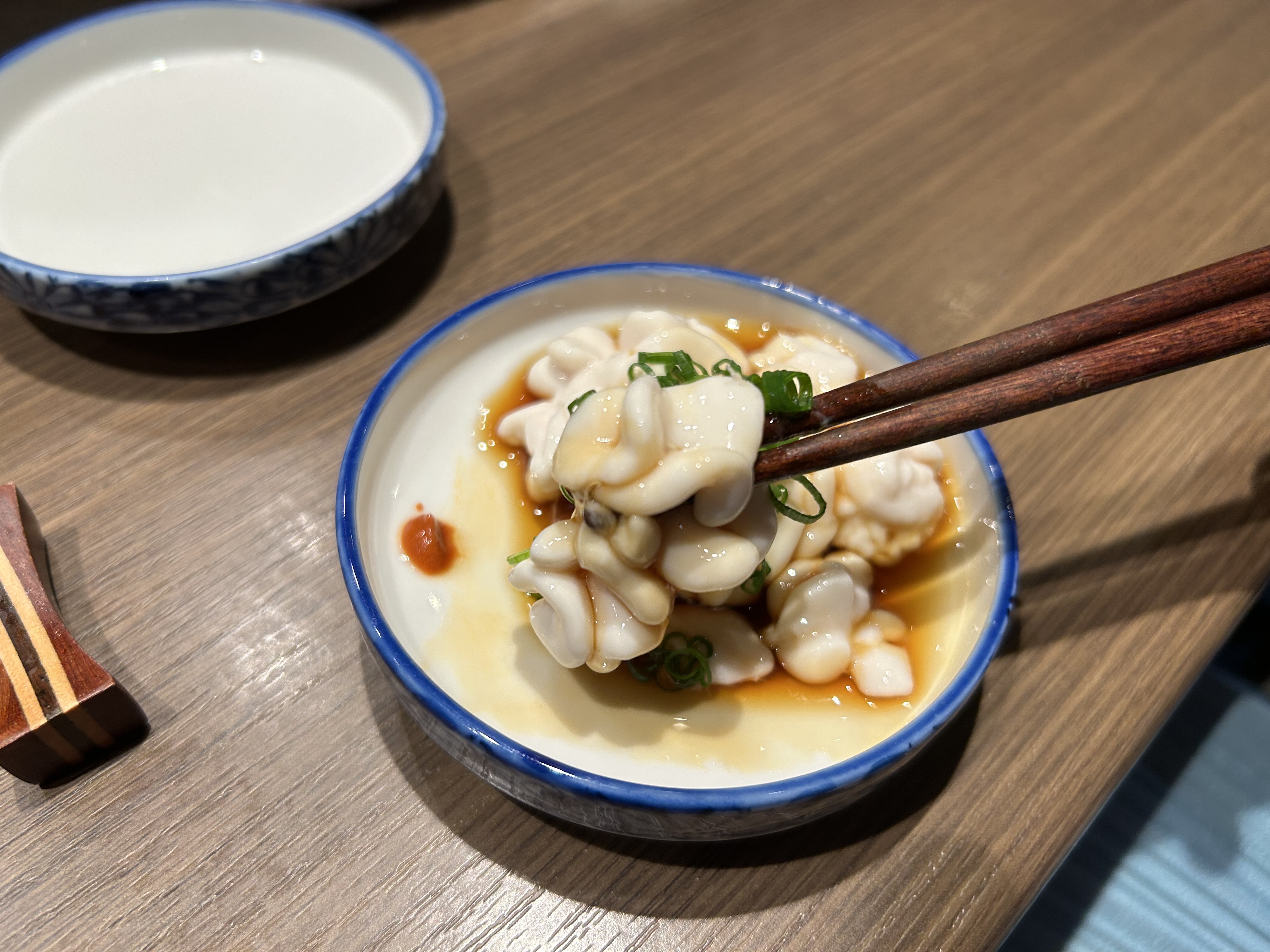
Even if there were a couple of dishes that were not to my taste, I did not go hungry. In fact, when it was time to leave at the end of our meal, I felt as though I was conspicuously waddling to the door. I was that full! This is one place in Tokyo that I would happily visit again and again.
Daiwa-zushi is open 6:00 am to 1:00 pm; closed Wednesdays and Sundays. It’s easy to find. As you exit Shijo-mae station, stay on the exit level and follow the catwalk to the left. Where the catwalk begins to cross the street, bear to the left and follow it until you reach an elevator. Take the elevator down to street level and go right. Daiwa-zushi will be in front of you.
© 2023 Jigsaw-japan.com and Vicki L. Beyer
We’re thrilled if you share this link; if you want to re-use in any other way, please request permission.
 Jigsaw Japan