This article, originally published in Number 1 Shimbun, takes readers to the sites of three WWII-era military bases on the Japanese island of Kyushu, and examines the activities on those bases, especially in the last months of the war. (Archived article from Number 1 Shimbun)
Category: Kumamoto
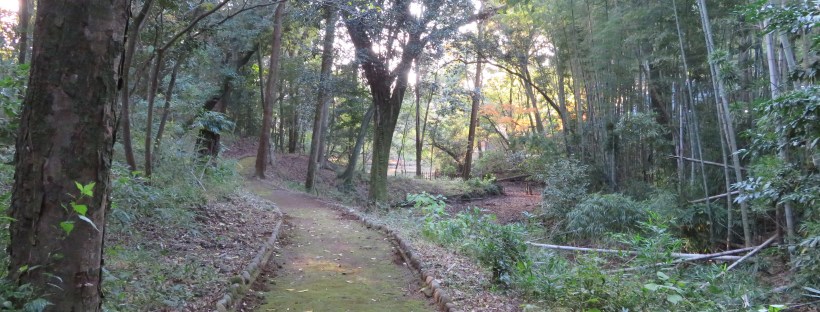
Kumamoto’s Tatsuda Nature Park: A lost world filled with spirits
This article in Japan Today introduces an off-the-beaten-track green space in Kumamoto that has deep historical connections to a number of individuals from Japan's feudal era. (Archived article)
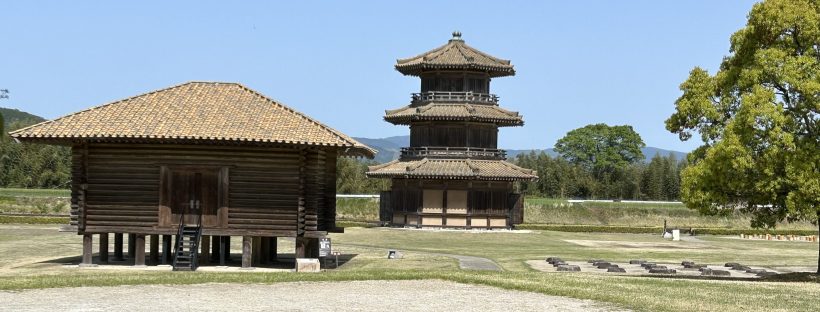
Kikuchi Castle: an ancient mountain fortress
Seventh century Japan wasn't yet a nation-state, but neither were any of its Asian neighbors. Nonetheless, the most powerful of the various groups on the Japanese archipelago, the Yamato, had regular trade and cultural exchanges with its counterparts on the Korean Peninsula, especially the kingdom of Baekche (southwestern quadrant of the peninsula). So when the … Continue reading Kikuchi Castle: an ancient mountain fortress
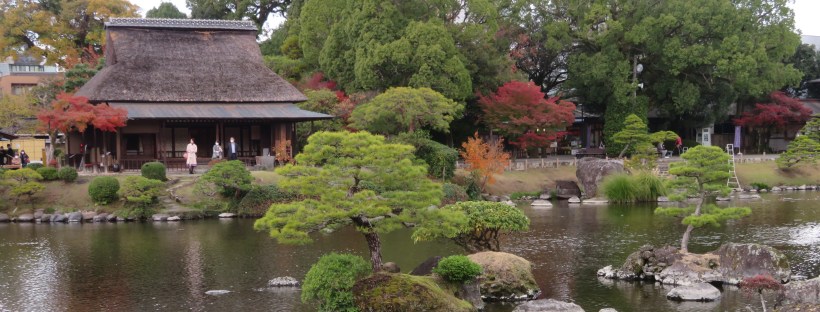
Suizenji Garden: one of the finest of Japan’s feudal samurai strolling gardens
This travel article for Japan Today visits Suizenji Jojuen, a traditional samurai strolling garden of the feudal age and an absolute must-see for visitors to Kumamoto. (Archived article in Japan Today.)
Kyushu Online Media Center: Stories
Not long ago I was commissioned to work on a major project to promote the island of Kyushu as a destination. I was asked to write fairly long pieces on each of several themes, largely to provide background information to spark interest. Those pieces, listed below, are now an information resource called the Kyushu Online … Continue reading Kyushu Online Media Center: Stories
How I Learned to Wield a Samurai Sword
During my last visit to Kumamoto Prefecture, I spent a bit of time acquiring some samurai skills, an experience I shared in this article in All About Japan.
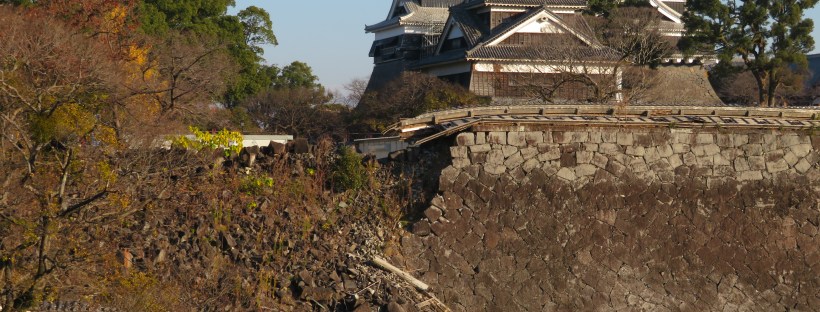
Kumamoto Castle: rising from the rubble
In 1994 I planned a three week journey from Tokyo to Kagoshima with a friend who was a Japan neophyte. I included in the itinerary several of Japan’s castles. When my friend saw the itinerary, he scoffed saying, “I’ve seen plenty of castles in Europe; I don’t need to see more castles.” Nevertheless, I left … Continue reading Kumamoto Castle: rising from the rubble
Finding fine porcelain off the beaten track
Without the mineral kaolin, fine porcelain could not exist. It is said that Korean potters first found kaolin in Japan near the village of Arita in Saga Prefecture in 1616, launching Japan's porcelain industry. These days, 80% of Japan’s kaolin actually comes from the Amakusa Islands of Kumamoto Prefecture, another area known for its pottery … Continue reading Finding fine porcelain off the beaten track
Yachiyo-za Theater: jewel in the crown of Yamaga
The late nineteenth/early twentieth century in Japan was a time when kabuki as an art form was liberalized, becoming more popular than ever. As a result, many communities built their own theaters. By the end of the Meiji Period (1868-1912) there were between four and five thousand such theaters across Japan. Only a few have … Continue reading Yachiyo-za Theater: jewel in the crown of Yamaga
Mount Aso: Armchair Travel, Art, and Memories
“Aso is a good-natured, even-tempered volcano, and it is not often that the steady cloud of smoke and steam which it emits varies in volume...” These words are from In Lotus-land Japan, a 1910 travelogue by Herbert G. Ponting. In these days when actual travel is not possible, I am enjoying reading (and in some … Continue reading Mount Aso: Armchair Travel, Art, and Memories
Sakitsu: a remote Amakusa port where Christians once concealed themselves
On the west coast of Shimoshima, the largest of the Amakusa Islands of Kyushu, is a large bay known as Yokaku Bay. Because of its location on the East China Sea, the bay, and particularly the town of Sakitsu in a small, but deep, harbor on the north shore, has a centuries-long history as a … Continue reading Sakitsu: a remote Amakusa port where Christians once concealed themselves
Unganzenji: a legacy of swordsmanship and piety
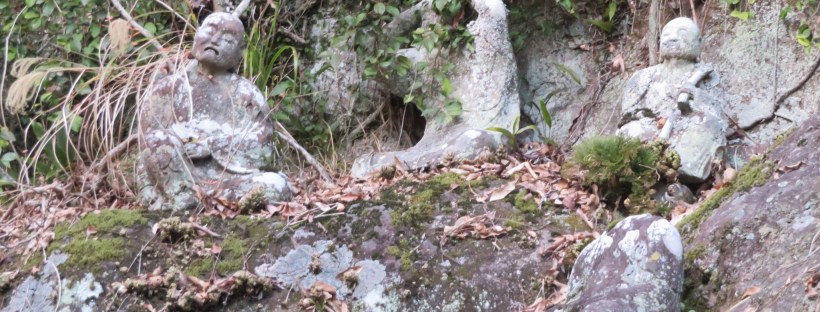
On the outskirts of Kumamoto City sits an isolated Zen temple that guards over an historic cave and a hillside of rakan (arhat) statues. Rakan are devout Buddhists who have attained enlightenment and live in a state of Nirvana. In Japan, collections of statues of 500 rakan, the number of disciples of Buddha believed to … Continue reading Unganzenji: a legacy of swordsmanship and piety