In mid-March 1868, Katsu Kaishu (1823-1899), Army Minister for Tokugawa Yoshinobu, last of the Tokugawa shoguns, was returning to his home in Edo (present day Tokyo) after successfully negotiating for the peaceful surrender of Edo Castle to troops representing the new government of the Emperor Meiji (1852-1912). The negotiations had taken place at Shoto-en, on … Continue reading Katsu Kaishu: living history by thinking future
Category: Destinations
Miles to Go and Promises Unkept: Women’s Rights in Postwar Japan
This article is a bit unusual for this blog--a perspective on women's rights in post-war Japan with particular emphasis on what rights did, and did not, make it into Japan's postwar constitution. Definitely part of the Japan jigsaw puzzle! It's in the September issue of the No. 1 Shimbun in honor of the record number … Continue reading Miles to Go and Promises Unkept: Women’s Rights in Postwar Japan
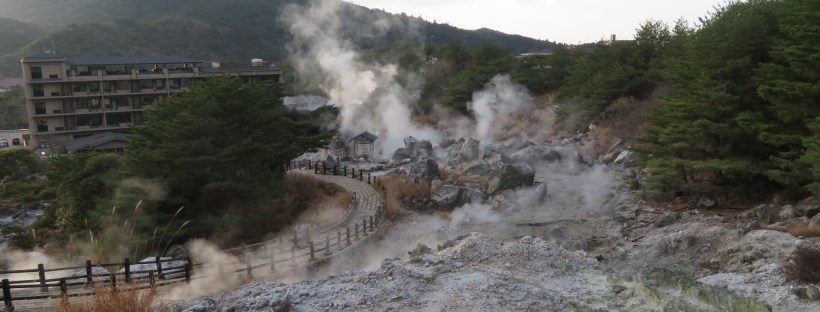
Unzen Onsen: This Could be Heaven or This Could be Hell
Looking for a getaway where you can enjoy nature and avoid crowds? This article describes Unzen Onsen, exactly such a place. Go on! Pamper yourself! (Archived article originally published by Tokyo Weekender)
Exploring Tokyo’s Architecture Through the ages: A walk in Bunkyo and Toshima
In keeping with current trends to micro-tourism, this article describes an urban walk in Tokyo featuring a number of lesser-known historical buildings. (Archived article originally published by Japan Today) At the end of your walk, on the way back to Edogawabashi Station, look for Kanpai Brewing on the opposite side of the river, just across … Continue reading Exploring Tokyo’s Architecture Through the ages: A walk in Bunkyo and Toshima
Hidden History in the Edo Outskirts: the Rolling Hills of Magome
In keeping with the current trend of "micro-tourism" (keeping tourism close to home), here's another walk through a less well-known suburban Tokyo neighborhood. This walk is less than 4 km. in length and includes a small local museum, so expect it to take about half a day. Use the map at the bottom of the … Continue reading Hidden History in the Edo Outskirts: the Rolling Hills of Magome
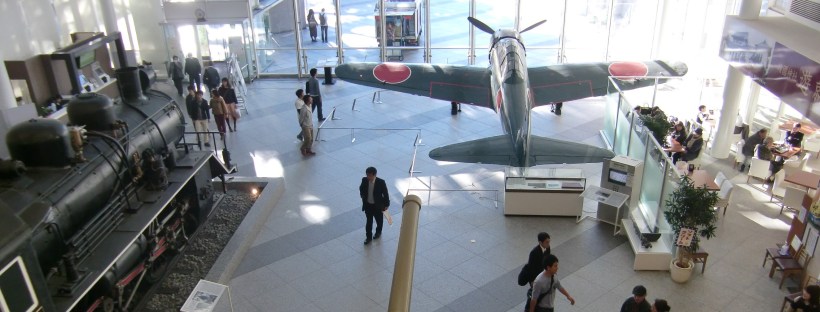
Remembering Wartime Japan
It has long been said that history is written by the victors. There may have even been a time when that was true. But no longer. In our modern age, there are many perspectives to the telling of history, including the history of Japan at war in the first half of the 20th century, a … Continue reading Remembering Wartime Japan
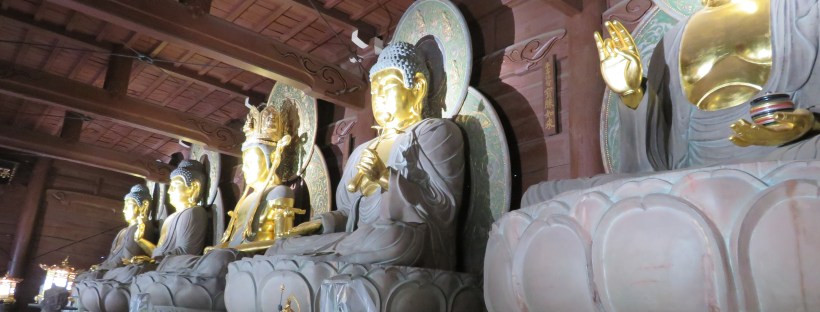
Kumano Magaibutsu: immoveable in more ways than one
In last week's blog post, I introduced a temple founded to house a statue of Fudo Myo-o, the great immoveable deity, carved by no less than the great Kobo Daishi (774-835). But Kobo Daishi is not alone in his admiration of Fudo Myo-o, whose image is found and worshiped across Japan. Even the earliest Buddhist … Continue reading Kumano Magaibutsu: immoveable in more ways than one
Naritasan Shinshoji: an ancient center of worship
While travellers often complain loudly about the inconvenient location of Narita Airport, Buddhist faithful who make a pilgrimage to nearby Naritasan Shinshoji, are rarely heard to do the same. The expansive and historical temple complex is one of the oldest and largest in this part of Japan. It is, of course, primarily a religious destination, … Continue reading Naritasan Shinshoji: an ancient center of worship
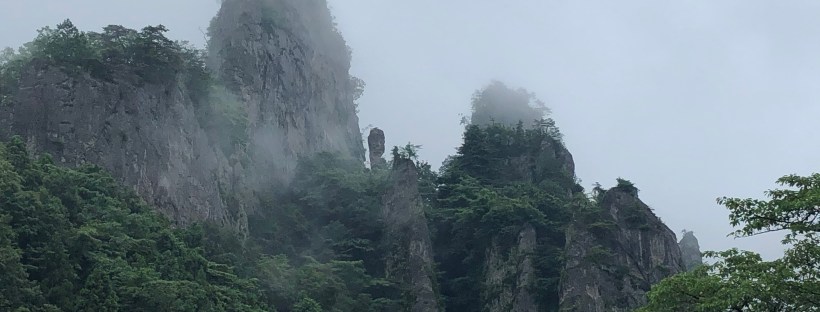
Shimonita: the Geopark off the beaten track
This article describes the geologically and historically fascinating destination of Shimonita, an easy overnight excursion from Tokyo. (Archived article originally published by Japan Today)
Castles, Cats and Sumo in Setagaya
Tokyo's Setagaya Ward is best known as Tokyo's bedroom, the most populous ward of the metropolis, principally a residential area. It also has a number of sights to enjoy and even history to experience. Here's an uncrowded suburban walk of around four kilometers, mostly through greenery, culminating in some of those sights and history. There's … Continue reading Castles, Cats and Sumo in Setagaya
Chasing an unusual seven lucky gods in Zoshigaya
A day walk in a pretty urban area is always fun. A walk with a mission, like collecting the stamps of seven lucky gods, is even more fun. I've written on several lucky gods walks to do at New Year's but here's one that can be done any time of year, takes about 3 hours, … Continue reading Chasing an unusual seven lucky gods in Zoshigaya
Takayama-sha: developing the art and science of sericulture
Gunma Prefecture, some 100 kilometers north of Tokyo, has centuries of history as a silk producing area in Japan. One particular sign that you're in an area where silkworms were once raised are the rooftops of old farm houses, that have one or more raised sections along the ridgepole of the roof, a structure that … Continue reading Takayama-sha: developing the art and science of sericulture