Not long ago I was visiting my friend Maki’s house. While using her toilet, I glanced down and realized with horror that I was wearing my house slippers. Quel faux pas! Most people are aware that Japan has a tradition of removing street shoes upon entering a home, or any other establishment with tatami mats … Continue reading Footfaults: [Mis]adventures in footwear

Category: Cultural experience
A Study in Sakura
This article explores the importance of Japan's many flowers. It further considers why the Sakura has become such an icon and why it has replaced other blossoms such as the plum.
The Stories of Survivors
By special guest blogger: Oliver Trapnell Nuclear issues are voiced strongly in Japan, and have had a direct impact on thousands of lives not only in Hiroshima, Nagasaki and Fukushima but also from cases such as the Daigo Fukuryū Maru (No. 5 Lucky Dragon fishing boat whose story inspired the Godzilla movies). Despite the sensitivity … Continue reading The Stories of Survivors
Hachinohe Bouillabaisse Festa – absolutely a reason to go north in winter
I'm not very fond of cold weather, which is perhaps one reason I particularly love the soothing steam of a good hot bowl of soup when I come in from the cold. I daresay I'm not alone in these sentiments. The Tohoku region of Japan, famously cold and snowy in winter, has many hearty winter … Continue reading Hachinohe Bouillabaisse Festa – absolutely a reason to go north in winter
The colors of Ko-Imari: it’s all about the glaze
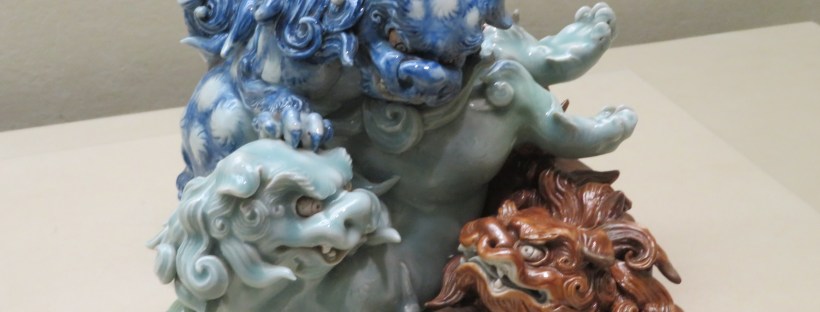
Stepping into the latest exhibition at Shibuya's Toguri Museum of Art, I felt as if I was in heaven. The exhibition, entitled "Beautiful Glazes in Ko-Imari Ware", features the glazes used on Ko-Imari ware, some of Japan's earliest refined porcelains, dating back to the 17th century. The pieces on display are exquisite. It was refugee … Continue reading The colors of Ko-Imari: it’s all about the glaze
What does it mean to be free?
Perhaps it's the result of a frugal upbringing or perhaps it's the fact that the day is cold and rainy and I want something to warm me, but as I am walking along the street, a sign that says "free coffee" catches my eye. What's weird is that a price is given just below those … Continue reading What does it mean to be free?
Hashigo-nori (ladder-top acrobatics) at Ikegami Honmonji
Old Edo was a firetrap. One and two-story structures, made mostly of wood, straw and paper, standing cheek-by-jowl with the neighbors, with everyone cooking and heating with open fires or charcoal braziers. Any little fire quickly got out of control and equally quickly spread to neighboring structures. Major fires were so common in the Edo … Continue reading Hashigo-nori (ladder-top acrobatics) at Ikegami Honmonji
The seven lucky gods of Minato: A different perspective on a well-known Tokyo district
This article takes readers on a walk to visit Japan's seven lucky gods at shrines and temples in the Minato neighborhood of Tokyo. Such walks are a popular new year's activity, said to bring luck and fortune to participants. This walk can only be done for that purpose between New Year's Day and Coming of … Continue reading The seven lucky gods of Minato: A different perspective on a well-known Tokyo district
Fortune Cookies for the New Year
Most people, upon hearing mention of fortune cookies, think of the waffle cookie confection that is usually served with the bill at Chinese restaurants (especially in North America). But we have fortune cookies in Japan, too, and one variety is available only at New Year's. Fortunes at new year's are a popular part of getting … Continue reading Fortune Cookies for the New Year
Good fortune is child’s play at the Asakusa Hagoita Ichi
In traditional Japan there are many rituals observed relating to seeing out the old year and successfully bringing in the new one. Sometimes these rituals, most of which occur in December, also involve acquiring “lucky charms” of various sorts. Asakusa, a venerable Tokyo neighbourhood known for its efforts to preserve traditions, is a particularly good … Continue reading Good fortune is child’s play at the Asakusa Hagoita Ichi
Christmas spirit in Yokohama
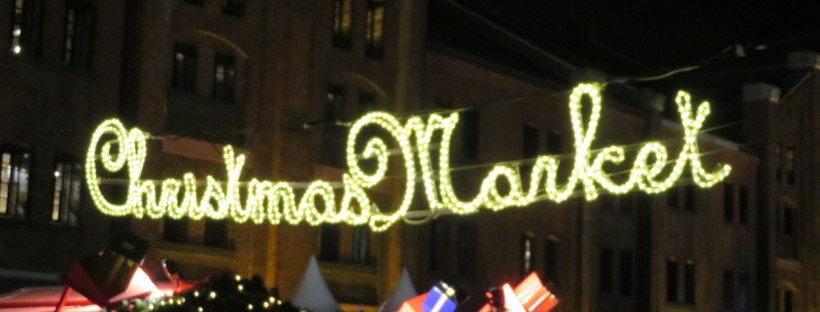
Who doesn't love a good open air market? And this time of year, German-style Christmas markets are particularly popular in Japan. The lights, music, and festive atmosphere are great to put one in the mood for Christmas. Last year I visited the Tokyo Christmas Market at Hibiya Park, which is on again this year through … Continue reading Christmas spirit in Yokohama
So many ways to eat soba!
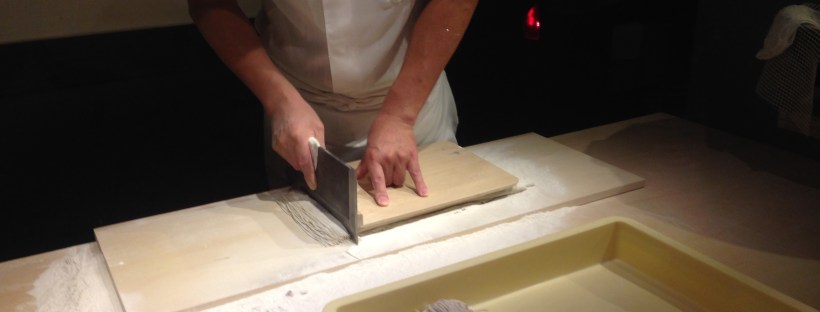
Soba, a Japanese noodle made of buckwheat, became popular in Japan during the Edo Period (1603-1868) and remains popular to this day. Frequently consumed as a snack or fast food, it can also form a complete meal. Buckwheat has been cultivated in Japan for centuries, although much of the buckwheat flour used these days is … Continue reading So many ways to eat soba!