This article introduces some fundamentals of traditional Okinawan folk music and a great Naha "live house" where it can be enjoyed. (Archived article – Originally published by Japan Today.)
Category: Destinations
Chasing Cherry Blossoms Along Uchigawa
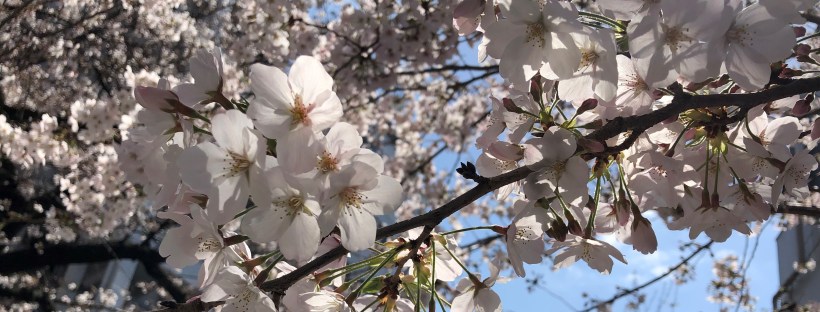
In these Covid times, hanami parties, picnics under blossoming cherry trees are discouraged. The next best way to enjoy the blossoms is by staying on your feet, a stroll under the blossoms. There are plenty of Tokyo neighborhoods where one can enjoy Japan's famous sakura. Let me introduce Ota-ku's Sakura Promenade, less well known than … Continue reading Chasing Cherry Blossoms Along Uchigawa
Dazaifu, ancient Japan’s Western capital
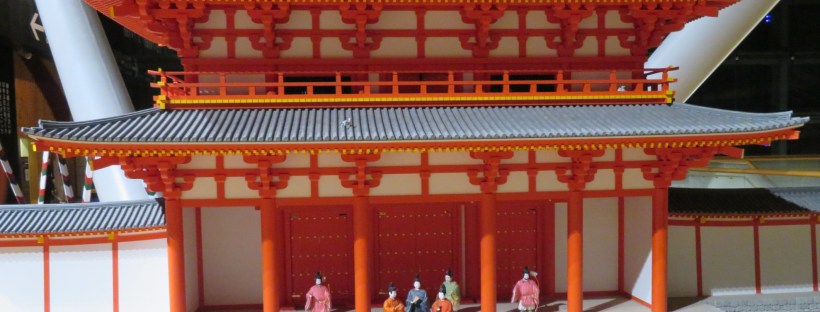
There has been exchange between Japan and Asia for more than 2,000 years. In the early part of what Westerners know as the first millennium, the objects and ideas introduced to Japan from China and Korea, in particular, enabled Japan to develop its own distinctive culture. The Asuka Period (538-710 CE) of Japanese history is … Continue reading Dazaifu, ancient Japan’s Western capital
Meguro’s Gyoninzaka – a different slant on Tokyo history
Heading west from Meguro Station it's all downhill, a descent into the Meguro River valley. Particularly dramatic is the descent on a narrow laneway accessed from the main exit of Meguro Station (on the southern side of Meguro-dori). This steep slope is known as Gyonin-zaka. A gyonin is a Buddhist ascetic, and apparently Daienji, a … Continue reading Meguro’s Gyoninzaka – a different slant on Tokyo history
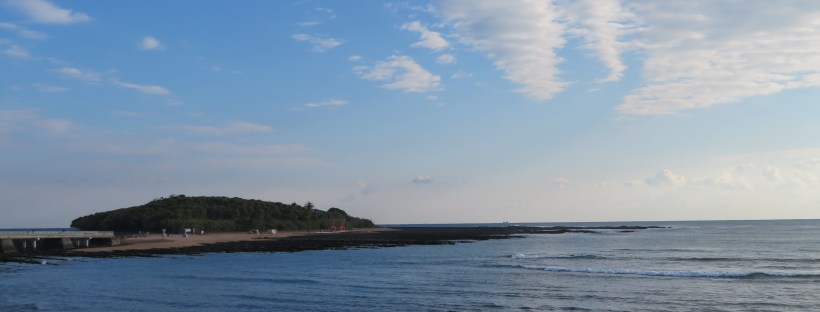
Aoshima: Dramatic Rocks and Romantic Legends
This article is about Aoshima, a Miyazaki beach town with a legendary island just offshore. The island is home to a romantic shrine and is surrounded by distinctive rock formations. (Archived article – Originally published by Japan Today.)
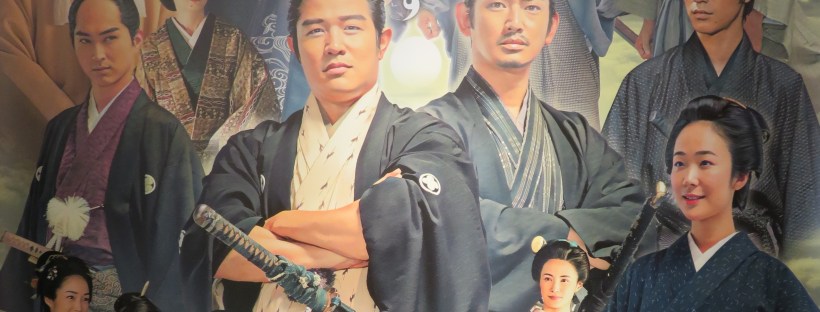
Satsuma Contributions to Meiji Modernization
One of my favorite times in Japanese history is the Meiji Period (1868-1912), when Japan re-opened itself to the world and rapidly modernized. Inevitably it was a time of turmoil. There was substantial economic and social upheaval as Japan industrialized and the rigid structures of shogunal Japan were abandoned. Satsuma Domain (now known as Kagoshima), … Continue reading Satsuma Contributions to Meiji Modernization
Hyuga, where Japan’s imperial dynasty was launched
February 11 is celebrated in Japan as "National Foundation Day", commemorating the date on which Japan's first emperor, Jimmu, ascended to the Chrysanthemum Throne in 660BC. Except…it never happened. Or, at least, there is no evidence that it did. Japan's earliest written records were written by the Chinese around the first century AD and the … Continue reading Hyuga, where Japan’s imperial dynasty was launched
Finding fine porcelain off the beaten track
Without the mineral kaolin, fine porcelain could not exist. It is said that Korean potters first found kaolin in Japan near the village of Arita in Saga Prefecture in 1616, launching Japan's porcelain industry. These days, 80% of Japan’s kaolin actually comes from the Amakusa Islands of Kumamoto Prefecture, another area known for its pottery … Continue reading Finding fine porcelain off the beaten track
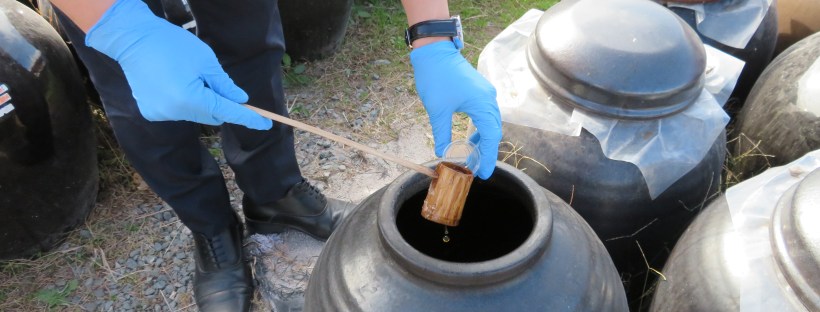
It’s a condiment. It’s a health food. It’s black vinegar.
Japan is well known for borrowing ideas and technology from other countries and adapting them to something distinctly Japanese. Black vinegar is one such item. More than two centuries ago, the village of Fukuyama on the eastern shore of Kagoshima Bay began producing black vinegar using methods imported from China. Refined and developed over the … Continue reading It’s a condiment. It’s a health food. It’s black vinegar.
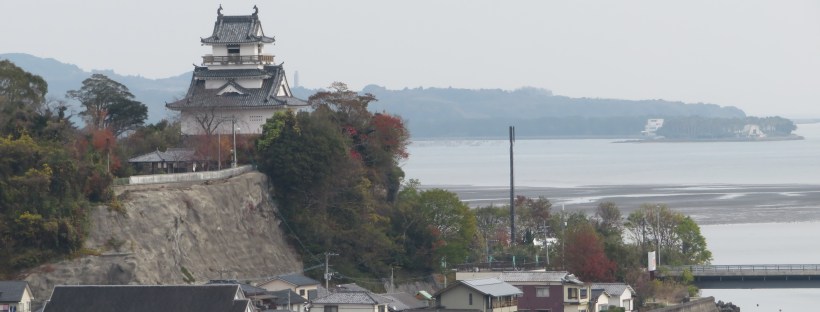
Kitsuki: Castle Town on the Sea
This article describes a well-preserved castle town in a strategic location on the island of Kyushu. (Archived article – Originally published by Japan Today.)
Yachiyo-za Theater: jewel in the crown of Yamaga
The late nineteenth/early twentieth century in Japan was a time when kabuki as an art form was liberalized, becoming more popular than ever. As a result, many communities built their own theaters. By the end of the Meiji Period (1868-1912) there were between four and five thousand such theaters across Japan. Only a few have … Continue reading Yachiyo-za Theater: jewel in the crown of Yamaga
Aloe Vera and Goats: an interesting symbiosis
During the Age of Discovery, Europeans sailed the world. Their ships often carried goats, which provided fresh milk and meat. Sailors often left a few goats on desert islands where they stopped for fresh water. These were intended to provide a means of sustenance for future shipwrecked sailors. Thus goats and islands have an historical … Continue reading Aloe Vera and Goats: an interesting symbiosis