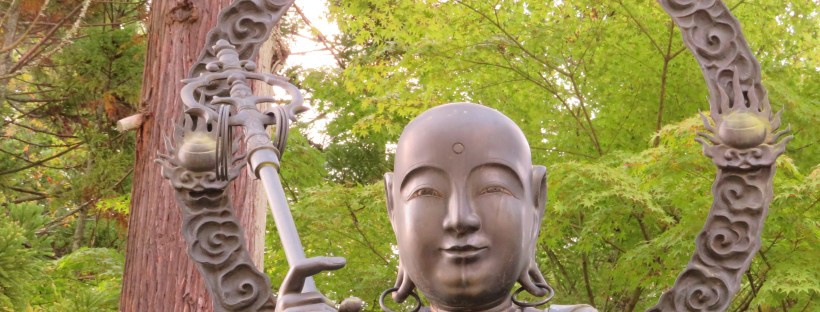
The Meiji Period (1868-1912) is perhaps my favorite period of Japanese history. It is the time when Japan, which had stagnated from being closed to the outside world since early in the 17th century, leapt forward, grafting new governmental structures to its traditional emperor system and adopting various new technologies to allow it to fend … Continue reading Stepping back in time: the Meiji Village Museum of Miyagi
Yosakoi: Japan’s happy dance
Japan has a long history of group dancing, especially during festivals. The dances might be performed during parades or as performances. Often everyone is dressed in the same yukata or kimono. In 1954, the Shikoku city of Kochi, concerned to boost local morale on the heels of the long struggle of post-war recovery, hit on … Continue reading Yosakoi: Japan’s happy dance
Toshiba scandal evokes bad old days of Japan Inc.
I was invited to write a brief analysis of the latest scandal to rock Toshiba, one of Japan's older industry leaders. This Asia Times article is the result (with a bit of hyperbole added by the editor).
Ancient Temples of the Deep North: Some of Tohoku’s Most Historical Temples
This article provides history and other information on four Ninth century temples in the Tohoku region that are still popular destinations for tourists and religious devotees alike. (Archived article – Originally published by Japan Today.)
Cherries in Japan: more than a springtime blossom
Every spring Japan celebrates the pale pink petal of the cherry blossom. And justifiably. But there is much more to cherries than just the delicate springtime blossom. In early summer, Yamagata Prefecture is popping with the fruit itself, little red balls of sweet juiciness. Further north, in Akita Prefecture, the bark of the mountain cherry, … Continue reading Cherries in Japan: more than a springtime blossom
Looking for Seven Lucky Gods at One of the Fuji Five Lakes
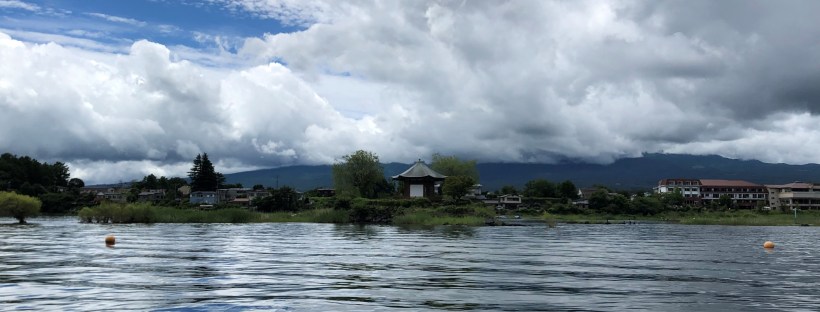
There are five lakes skirting the northern base of Mt. Fuji, Japan's iconic highest mountain. These lakes are the result of rivers dammed by lava flowing from the Fuji volcano in eruptions of centuries past. Today they are all popular recreation areas. Lake Kawaguchi (a/k/a Kawaguchi-ko) is the northernmost of these lakes, and the second … Continue reading Looking for Seven Lucky Gods at One of the Fuji Five Lakes
Ouchi-juku: well-preserved Tohoku post town
During Japan's Edo Period (1603-1867), the movement of people and goods was strictly controlled by the shogunate. Anyone wishing to travel was expected to apply for and receive permission to do so, and then to travel only on approved routes. Generally speaking, the only acceptable reasons to travel were for trade or religious purposes or, … Continue reading Ouchi-juku: well-preserved Tohoku post town
5 Days Exploring Akita, Aomori and Iwate Prefectures with the JR East Pass
This article provides a fun and interesting five day itinerary for taking advantage of the incredible bargain of the JR East Pass while getting acquainted with the amazing diversity of the Tohoku region. (Archived article; originally published in Gaijinpot)
Kumamoto Castle: rising from the rubble
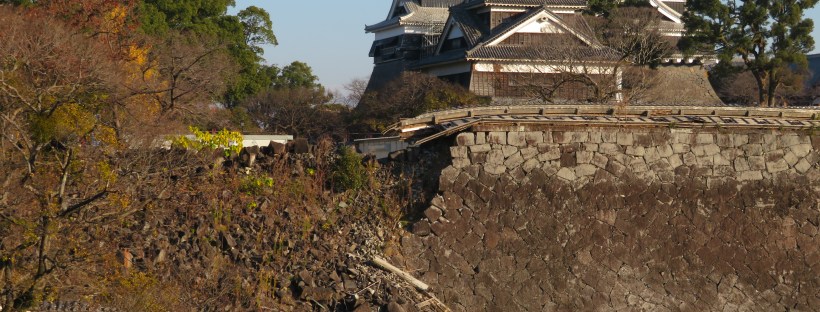
In 1994 I planned a three week journey from Tokyo to Kagoshima with a friend who was a Japan neophyte. I included in the itinerary several of Japan’s castles. When my friend saw the itinerary, he scoffed saying, “I’ve seen plenty of castles in Europe; I don’t need to see more castles.” Nevertheless, I left … Continue reading Kumamoto Castle: rising from the rubble
Kujukushima – how many pretty little islands?
Kujukushima Bay in Nagasaki Prefecture is both a popular recreation/sightseeing spot and a thriving fishing port especially known for its pearl farming and oyster production. Although "Kujukushima" literally means "99 islands", there are actually 208 islands in the bay not to mention a number of rocky outcrops that don't meet the technical definition of island. … Continue reading Kujukushima – how many pretty little islands?
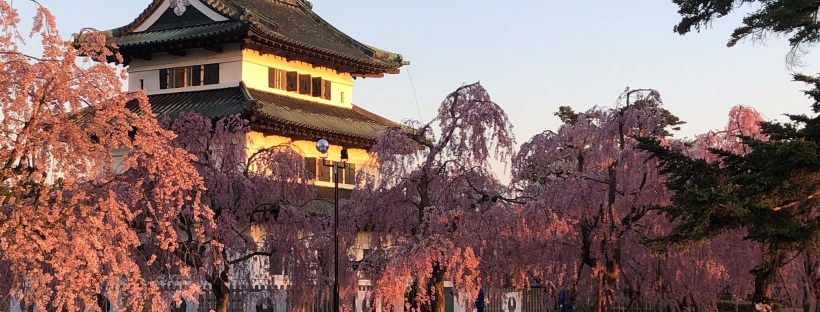
Seeking Sakura and Samurai in Tohoku: Past and Present Glories of Kakunodate and Hirosaki
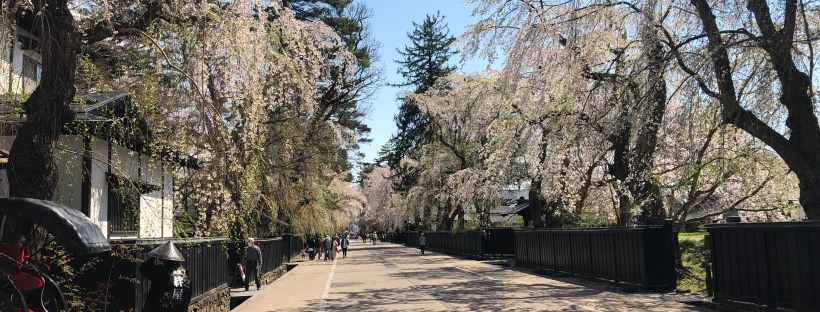
This article introduces two Tohoku destinations with fascinating samurai history and beautiful cherry blossoms. (Archived article – Originally published by Japan Today.)
Lighthouses and Lines on a Map
Humans have been using imaginary lines on a map to navigate the world for over two millennia. The concept is simultaneously practical and romantic. The same can be said of shining a light from a high place to warn sailors of unseen dangers, the magic of a lighthouse. In Japan, 40° North latitude seems to … Continue reading Lighthouses and Lines on a Map