February 11 is celebrated in Japan as "National Foundation Day", commemorating the date on which Japan's first emperor, Jimmu, ascended to the Chrysanthemum Throne in 660BC. Except…it never happened. Or, at least, there is no evidence that it did. Japan's earliest written records were written by the Chinese around the first century AD and the … Continue reading Hyuga, where Japan’s imperial dynasty was launched
Finding fine porcelain off the beaten track
Without the mineral kaolin, fine porcelain could not exist. It is said that Korean potters first found kaolin in Japan near the village of Arita in Saga Prefecture in 1616, launching Japan's porcelain industry. These days, 80% of Japan’s kaolin actually comes from the Amakusa Islands of Kumamoto Prefecture, another area known for its pottery … Continue reading Finding fine porcelain off the beaten track
It’s a condiment. It’s a health food. It’s black vinegar.
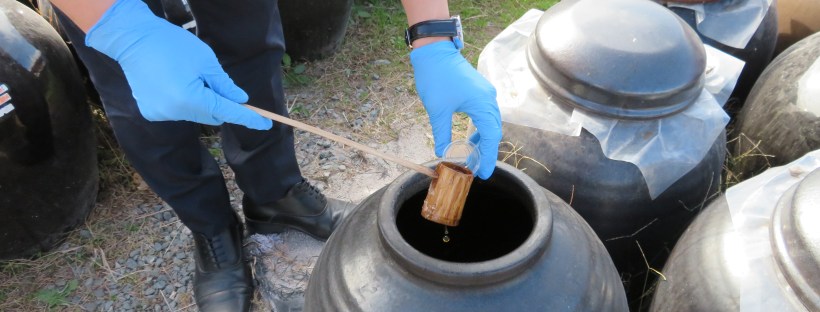
Japan is well known for borrowing ideas and technology from other countries and adapting them to something distinctly Japanese. Black vinegar is one such item. More than two centuries ago, the village of Fukuyama on the eastern shore of Kagoshima Bay began producing black vinegar using methods imported from China. Refined and developed over the … Continue reading It’s a condiment. It’s a health food. It’s black vinegar.
Kitsuki: Castle Town on the Sea
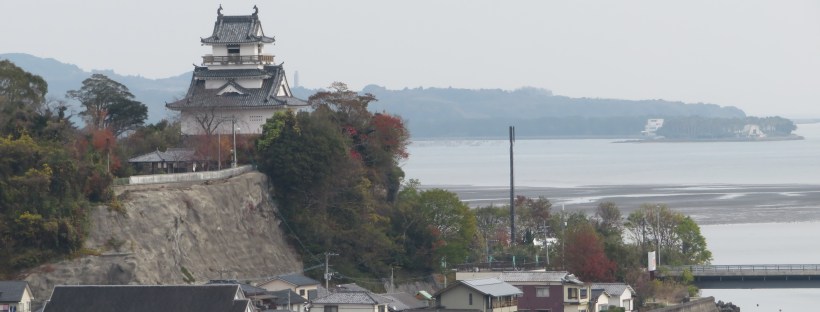
This article describes a well-preserved castle town in a strategic location on the island of Kyushu. (Archived article – Originally published by Japan Today.)
Japan’s Cutting Edge Cutlery
Anyone who's ever wandered into a kitchen knows how important a good knife is to food preparation. Arguably, Japanese kitchen knives, developed from Japan's long sword-making tradition, are the best in the world. Nenohi knives are among the most popular with professional chefs in Japan, even though the company is relatively young by Japanese standards, … Continue reading Japan’s Cutting Edge Cutlery
Yachiyo-za Theater: jewel in the crown of Yamaga
The late nineteenth/early twentieth century in Japan was a time when kabuki as an art form was liberalized, becoming more popular than ever. As a result, many communities built their own theaters. By the end of the Meiji Period (1868-1912) there were between four and five thousand such theaters across Japan. Only a few have … Continue reading Yachiyo-za Theater: jewel in the crown of Yamaga
Aloe Vera and Goats: an interesting symbiosis
During the Age of Discovery, Europeans sailed the world. Their ships often carried goats, which provided fresh milk and meat. Sailors often left a few goats on desert islands where they stopped for fresh water. These were intended to provide a means of sustenance for future shipwrecked sailors. Thus goats and islands have an historical … Continue reading Aloe Vera and Goats: an interesting symbiosis
The seven lucky gods of Fukagawa: Ensuring a good year to come
This article describes a seven lucky gods pilgrimage, a short walk popular in the New Year's season as a means to secure good fortune for the new year, something most of us especially want for 2021! The walk is an easy distance (less than 5 km.) and goes through one of Tokyo's oldest neighborhoods. (Archived … Continue reading The seven lucky gods of Fukagawa: Ensuring a good year to come
Historical transit port Hizen Hamashuku
While Japan was fundamentally closed to the outside world during the Edo Period (1603-1868), it still maintained a robust domestic economy. This economy was largely centered on agricultural production that led to production of secondary food products all of which fed the entire nation, allowing other economic activity also to flourish. Central to all this … Continue reading Historical transit port Hizen Hamashuku
The Streets of Kochi: So Many Personalities
This article describes a number of fun and interesting features of the city of Kochi, on the Pacific coast of Shikoku island. (Archived article originally published by Tokyo Weekender)
Earthquake Heritage Taro Kanko Hotel: reminder of tragedy
Just off the main highway in the fishing port town of Taro, north of Miyako in Iwate Prefecture, stands a curious, derelict-looking building. Derelict buildings are not particularly unusual in Japan, but in this area, which was flooded by the tsunami of March 11, 2011, most buildings are new; their predecessors either destroyed by the … Continue reading Earthquake Heritage Taro Kanko Hotel: reminder of tragedy
Ryusendo: The cave of the dragon’s spring
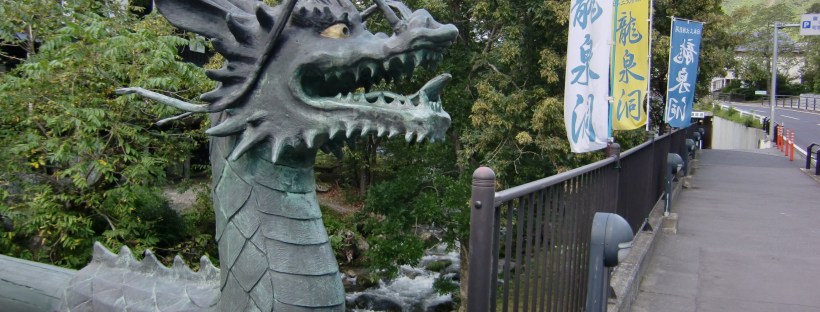
Ryusendo, one of the three largest limestone caves in Japan, sits in the mountains of Iwaizumi, less than 15 kilometers from the Pacific Coast of Iwate Prefecture. An underground river pours out of the mouth of the cave, perhaps leading to its name, "cave of the dragon's spring". It is a designated National Natural Treasure, … Continue reading Ryusendo: The cave of the dragon’s spring